
Closing Line Value reflects how your price compares to the market by the time an event starts. The outcome of a single bet can be random. Price is not. The market expresses probability through odds, and by kickoff, that estimate is usually more complete.
If you consistently take worse prices than the closing line, you are not competing with other bettors — you are paying the market to take your bets. Taking better prices is not an advantage. It is the baseline required to compete.
What Is Closing Line Value
Closing Line Value (CLV) measures the difference between the odds you take and the odds available when the market closes. If your price is better than the closing line, you have positive CLV. If it is worse, you have a negative CLV.
CLV is not a separate type of odds. It is a comparison between your entry price and the closing price.
It applies to all major bet types:
- moneylines
- point spreads
- totals
Example:
- you bet at +150
- the market closes at +130
You secured a better price than the market closed at.
Why the Closing Line Matters
The closing line is the most complete price the market produces before the event starts. Early prices are built on limited information and lower limits. As the event approaches, information updates and limits increase, forcing prices to adjust. Not all line movement is driven by sharp money. Some shifts happen simply because limits increase closer to kickoff and more volume enters the market. By the time the market closes, the line reflects both updated information and the weight of betting volume. This is where CLV is actually created — through changes in price and changes in the line itself.
Price vs Line Movement: The Two Sources of CLV
These two types of movement affect your bet in different ways.
Price movement
- you bet at +120
- the market closes at +105
You secured a better price than the closing line. This means you are getting a higher payout for a probability the market later priced lower.
Line movement
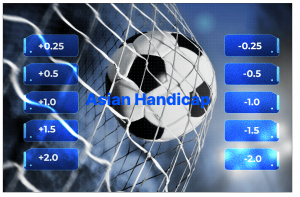
- you bet at -3
- the market closes at -3.5
At -3, a push is possible. At -3.5, every outcome is a win or a loss.
That half-point removes one outcome and makes the position more volatile. Compared to your entry, the closing line carries a higher risk of losing.
The same applies to totals:
- Over 2.5 vs Over 3
- Under 2.5 vs Under 3
At 3, a push is possible. At 2.5, it is not.
Even when odds look similar, the line itself can carry more value than the price.
“Price CLV and line CLV are not interchangeable.”
In moneyline bets, only the price matters. In spreads and totals, the number often matters more than small differences in odds.
How CLV Differs Across Market Types
CLV is not measured the same way across all markets. In moneyline bets, it is purely a price comparison. There is no line to move. In spreads and totals, both the number and the price matter. A shift from -3 to -3.5 or from 2.5 to 3 changes the structure of the bet, not just the payout. Because of that, identical odds can represent very different positions depending on the market.
How to Measure CLV Without Misleading Yourself
It looks simple to measure, but the method you use can distort the result. The quick approach is to compare prices directly.
- you bet at +150
- the market closes at +130
This gives a fast indication of whether your price was better or worse than the close. The problem is that raw odds include the bookmaker’s margin. For example, 1.91 / 1.91 already implies a total probability above 100%. When you compare these prices directly, you are working with inflated numbers. This can make your CLV appear stronger than it actually is.
A more accurate approach adjusts the closing line before comparison.
- remove the vig
- convert the closing price into a fair probability
- compare your price to that baseline
You do not need to do this for every bet, but ignoring it entirely can lead to overstating your edge.
How to Track CLV
CLV becomes useful only when tracked across a series of bets. For bettors trying to beat the closing line, it shows whether their entries are actually ahead of the market.
For each bet, you compare two values:
- the price you took
- the closing price
The goal is to identify a consistent pattern. If your average CLV is negative, you are consistently entering at worse prices than the market closes at. That is a structural disadvantage. If your CLV is positive, you are entering before prices adjust, taking numbers that later disappear.
Breaking CLV down further makes the source of that edge visible:
- by sportsbook
- by timing
- by market type
This shows whether you are consistently getting ahead of the market, or simply taking available prices.
Limits of Closing Line Value
CLV is a useful signal, but it does not guarantee profit or a real edge. A bet with a strong CLV can lose. A bet with poor CLV can win. Beating the closing line only shows that your price was better than the market’s final position. It does not prove that the market itself was accurate. This matters because not all markets are equally efficient. In liquid markets, the closing line is usually more reliable. In smaller or less active markets, prices can remain unstable even at close.
This is especially true in:
- props
- niche leagues
- low-liquidity events
In these cases, positive CLV is less meaningful. Measurement also affects the result. Comparing raw odds without removing margin can overstate your CLV.
Closing Line works best in markets where the closing price is efficient. In weaker markets, beating the closing line can reflect noise rather than a real edge.
How to Beat the Closing Line
Beating the closing line is not about predicting results. It is about entering the market at a better price before it adjusts. Most movement happens as information is incorporated and limits increase. Early prices are less complete, which creates both opportunity and noise. Price differences across sportsbooks are one of the simplest sources of CLV. Taking the best available number improves your position without changing the bet. Timing matters because prices adjust after new information and betting activity. Entering before those adjustments is where the closing line is created. Not all movement reflects sharp action. Some changes are driven by increased limits and broader market participation closer to kickoff.
In practice, beating the closing line comes from three things:
- getting access to better prices than the market average
- entering before the market incorporates new information
- operating in markets where prices are still inefficient
A common mistake is focusing on results instead of price. A winning bet with poor CLV still reflects a weak entry, even if the outcome was positive.